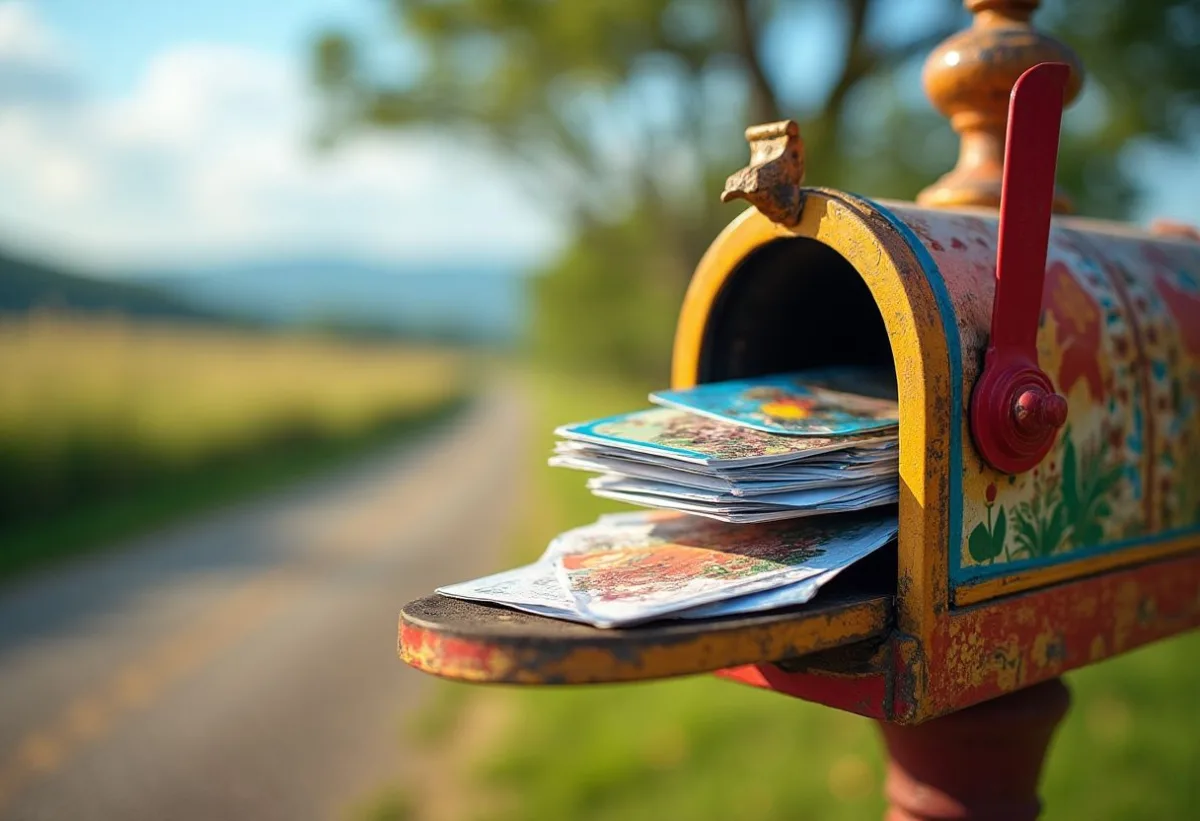
In a world where emails and instant messages reign supreme, the art of sending a card sometimes seems relegated to a bygone era. Yet, these simple pieces of paper, adorned with words and drawings, carry immense emotional potential. Sending a card is to offer a piece of oneself; it is taking the time to choose the right words, to convey a personal message that will not get lost in the labyrinth of an electronic inbox.
The History of the Postcard
The postcard, much more than just a means of communication, has evolved with the times while retaining its primary function: connecting people. Let’s dive into the past to better understand its evolution and impact on society.
- Origins: The first postcards emerged at the end of the 19th century. They were initially used in Austria to enhance rapid and low-cost communication.
- Popularization: Quickly, many countries adopted this mode of communication. During the Belle Époque, postcards became a true societal phenomenon, often collected for their artistic illustrations.
- Evolution: Over the decades, postcards have become a popular means of expression, serving both as travel souvenirs and carriers of information.
- Cultural Impact: By incorporating artistic and cultural elements, they have contributed to the dissemination of art and popular culture.
Greeting Cards: More Than Just a Message
Greeting cards are a deeply rooted tradition in many cultures, with each special occasion calling for the sending of cards to convey warm thoughts and wishes.
Greeting cards have this unique ability to convey emotions in a way that is both personal and universal. Whether celebrating a birth, a birthday, or wishing happy holidays, they reflect our thoughts and feelings. Beyond the printed words, they carry the attention given to the recipient. The impact of a handwritten card remains relevant in our modern world. By taking the time to write a message by hand, the sender adds a personal touch that is often absent from digital communications.
Modern Cards: Interactivity and Personalization
With the advent of new technologies, cards have managed to reinvent themselves. The era of static cards is over; today, personalization and interactivity are the keywords.
The card to send is no longer just a decorated piece of paper. Thanks to technology, it is now possible to integrate animated elements, music, and even video messages. Online platforms offer the possibility to design unique cards tailored to individual tastes and preferences. These innovations make each sending memorable while preserving the very essence of the card: sharing a sincere thought. Personalization options allow everyone to express their creativity while conveying a unique and personal message.
The Card: A Sustainable Communication Tool
In light of rising environmental concerns, the postcard and greeting card position themselves as sustainable alternatives to often ephemeral and energy-consuming digital communications.
- Recycled Materials: More and more cards are made from recycled materials, thus reducing their environmental impact.
- Emotional Durability: Unlike easily forgotten digital messages, cards have a physical presence and can be kept for years.
- Reducing Carbon Footprint: By favoring local or eco-friendly cards, one can minimize emissions related to their production and distribution.