A pool that turns green within the first week of heat is often a sign of a poor treatment choice or an undersized filtration system. Before discussing maintenance, the type of pool and its equipment determine the summer workload. Choosing your pool is already choosing your level of maintenance.
Filtration system: the parameter that dictates all maintenance
You may have noticed that a pool can appear clean on the surface but become cloudy within hours? Filtration alone does the majority of the work in purifying the water. A filter that is too small for the volume of the pool forces you to multiply chemical treatments, which increases costs and damages the surfaces.
The choice of filter depends on the volume of water. A sand filter is suitable for medium-sized pools and is cleaned by backwashing. A cartridge filter requires less space but regular replacement of cartridges. The diatomaceous earth filter offers the highest filtration fineness, but its maintenance is more technical.
The daily filtration duration is calculated simply: divide the water temperature by two. At 28 °C, count on about 14 hours of operation. In the height of summer, reducing this time to save electricity results in water that turns. To compare available equipment and find a pool suitable for your land, the Refair site for pools allows you to evaluate different configurations before purchasing.
Water treatment: chlorine, salt, or bromine, which disinfectant to choose
Chlorine remains the most widely used disinfectant for private pools. Its effectiveness is well documented, and its cost is moderate. However, it generates chloramines when in contact with organic matter (sweat, sunscreen), which are responsible for the characteristic odor and eye irritations.
Salt electrolysis produces chlorine directly in the water, which avoids handling chemical products. The salt is recycled in a loop: an electrolysis cell transforms dissolved salt into sodium hypochlorite. The comfort of swimming is better, but the initial installation costs more, and the cell must be descaled regularly.
Bromine is an interesting alternative for people sensitive to chlorine. It remains stable at high temperatures, making it suitable for spas and heated pools. Its price per kilogram is higher than that of chlorine.
Chemical balance: three values to monitor each week
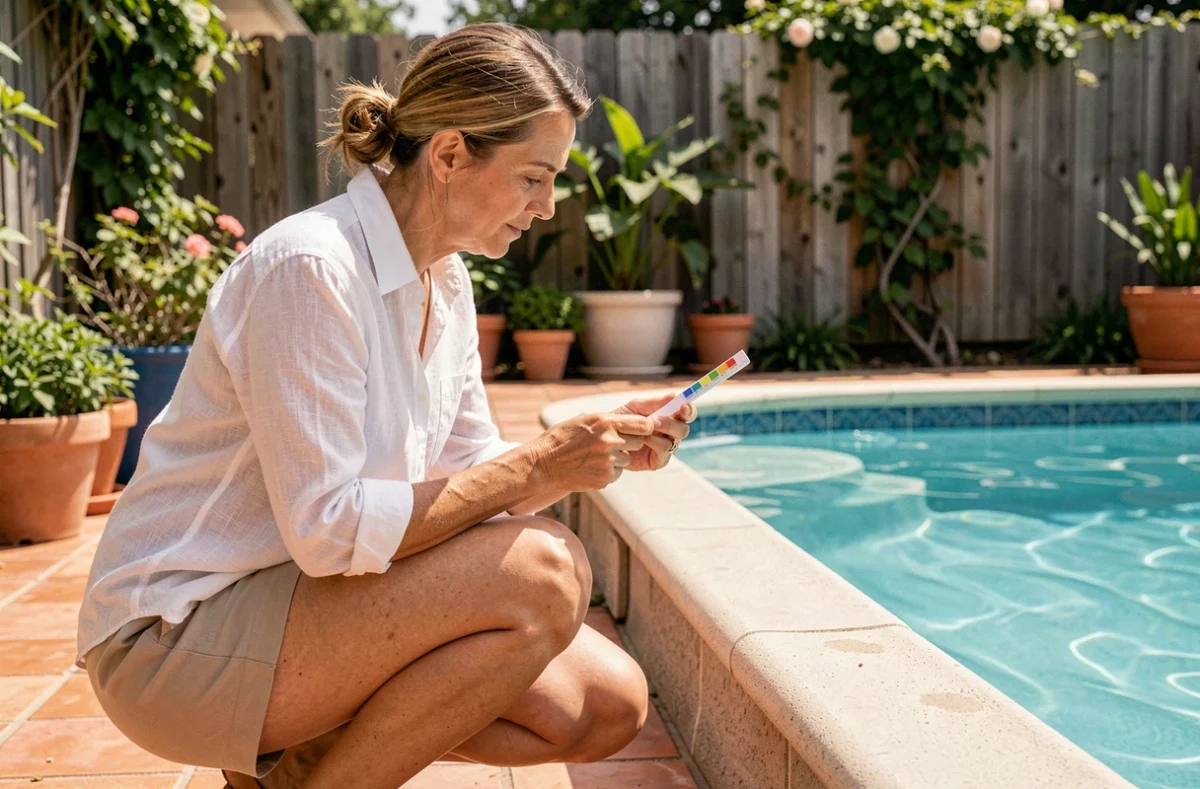
Regardless of the disinfectant chosen, the pH must remain within the recommended range for the treatment used. Outside of this range, the disinfectant loses effectiveness, and swimmers experience irritations. A pH that is too low corrodes metal equipment. A pH that is too high promotes calcium deposits.
- The pH is measured with test strips or an electronic tester, at least once a week during the season.
- The TAC (total alkalinity) reflects the buffering capacity of the water: if it is too low, the pH fluctuates constantly despite corrections.
- The residual disinfectant level indicates whether the amount of free chlorine or bromine is sufficient to neutralize the bacteria present in the pool.
Correct the pH before adding disinfectant. The opposite wastes product.
Pool drainage: a regulatory constraint often ignored
Draining your pool into the garden or a ditch may seem harmless. However, drainage water is considered domestic wastewater. Article L.211-2 of the Environmental Code prohibits its discharge into nature when it risks harming health, wildlife, or flora.
Discharging into the sewage system requires the approval of the competent authorities, usually the town hall or the sanitation network manager. In practice, most homeowners are unaware of this until a neighbor reports abnormal runoff.
Reuse of pool water: what the July 2024 decree allows
The decree of July 12, 2024, opens the possibility of reusing certain non-potable waters, including pool water, for domestic uses such as irrigation. However, this reuse requires a strict separation from the drinking water network and the installation of disconnection devices. Depending on the case, a declaration or prefectural authorization may be required.
Winterizing the pool: active or passive depending on your climate
There are two winterizing methods, and the choice mainly depends on your region.
Passive winterizing involves lowering the water level below the return jets, draining the pipes to prevent freezing, and then covering the pool. This method is suitable for regions where freezing is frequent and prolonged.
Active winterizing keeps the filtration running at reduced capacity, for a few hours a day. The water continues to circulate, preventing freezing in the pipes. This approach simplifies the restart in spring but consumes electricity all winter.
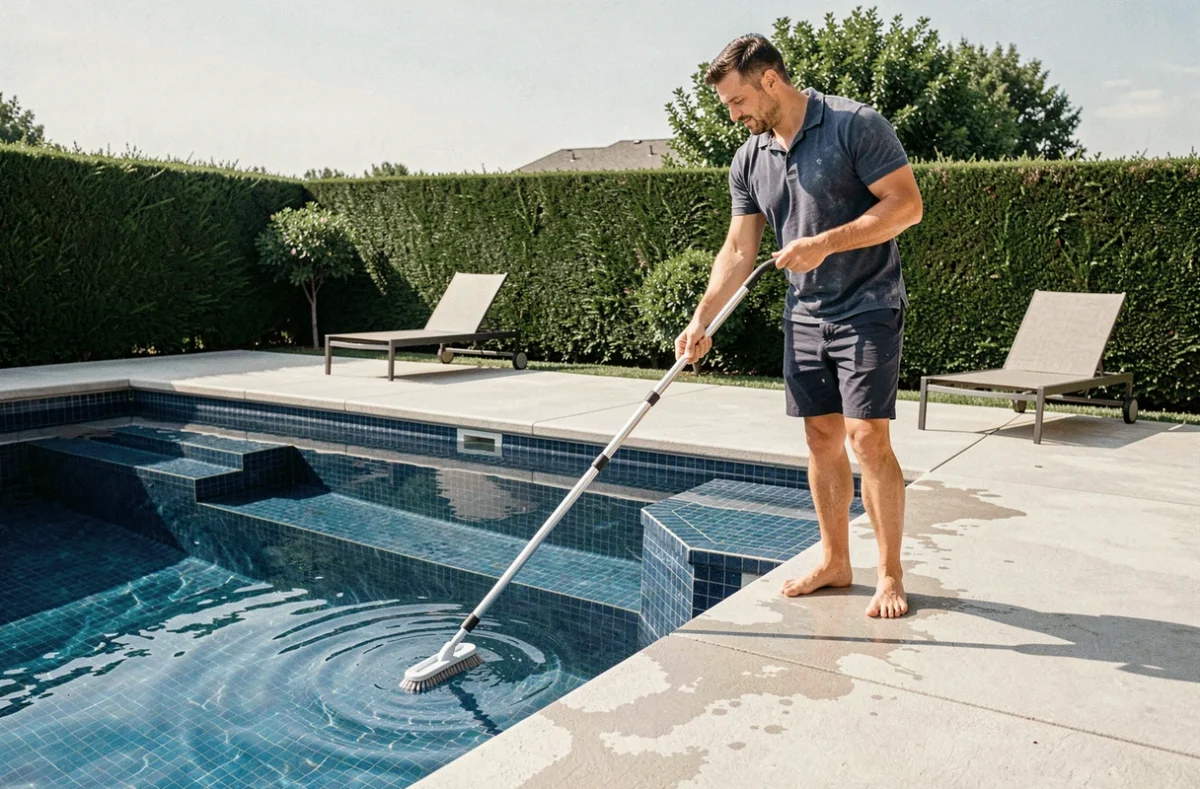
- Clean the pool (walls, waterline, bottom) before starting winterizing to prevent deposits from settling in for months.
- Adjust the pH and disinfectant level one last time, then add a winterizing product that limits algae growth.
- Protect the pool with a tight winter cover, which prevents debris from falling into the water and reduces evaporation.
- Check the condition of the cover and the water level at least once a month, even in the middle of winter.
The spring restart will be quicker if the winterizing was done carefully. A poorly prepared pool in autumn may require partial drainage and a shock treatment with chlorine before any swimming, delaying the opening by several days and increasing product consumption.