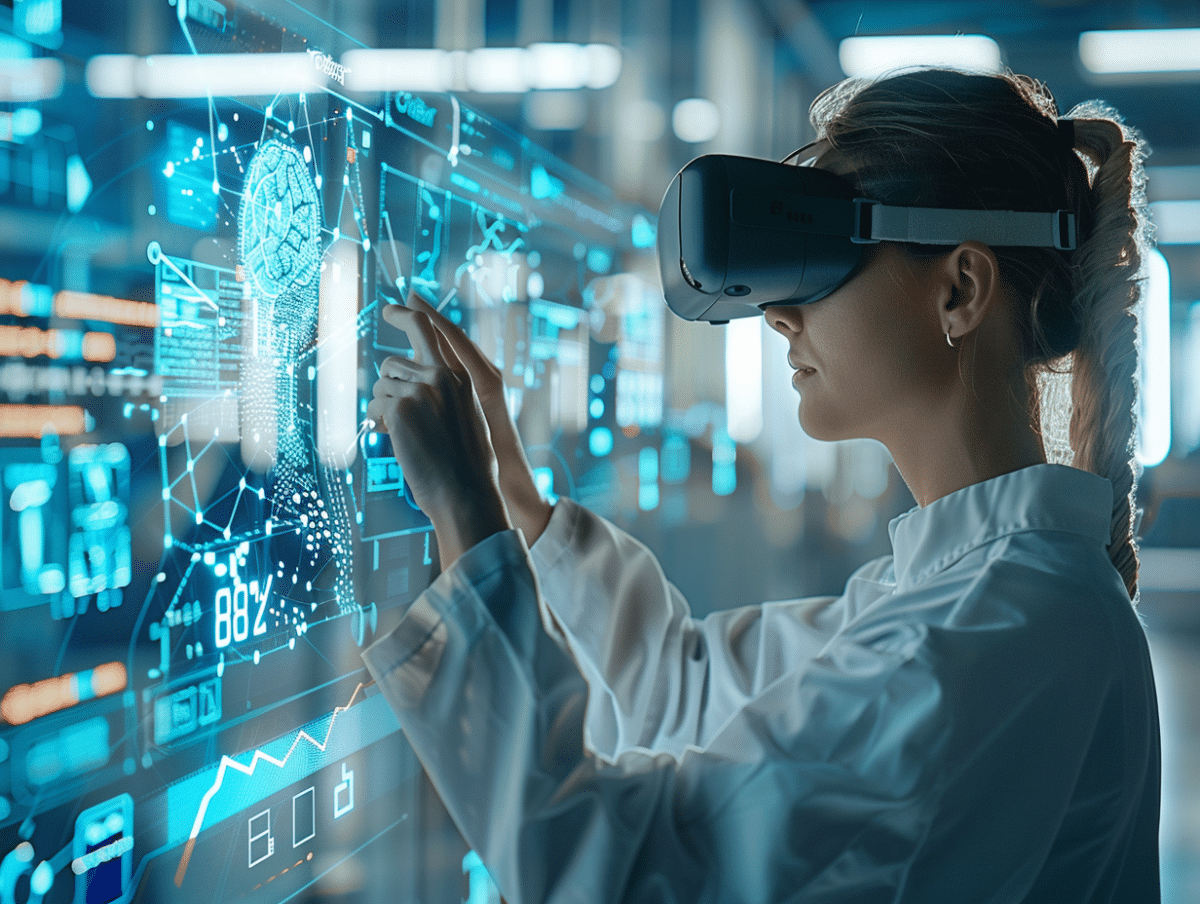
In a world where science and technology are advancing by leaps and bounds, a new era is emerging on the horizon, that of expanded sensory capabilities. These extraordinary faculties, which go beyond the traditional five senses, open the door to human experiences previously unimaginable. They manifest in various forms, whether through heightened perceptions enabled by cybernetic implants or amplified sensitivities through genetic modifications. The impact of these advancements on society, culture, and human interaction offers a fascinating field of exploration for science, while also raising profound ethical and philosophical questions about the very essence of human experience.
Exploration of Expanded Sensory Capabilities: Manifestations and Theories
Testimonies abound from individuals reporting experiences that exceed the range of conventional five senses. Synesthesia, for example, is a condition where the association of multiple senses occurs simultaneously, leading an individual to ‘see’ sounds or ‘taste’ colors. These cases are no longer isolated anomalies but studied phenomena. Clairvoyance, often relegated to the realm of superstition, is now observed as a perception of events outside the normal sensory field, requiring careful scientific investigation to unravel its mechanisms.
Furthermore, clairsentience and intuition enter the scientific debate as forms of immediate understanding without apparent reasoning. Studies are examining these abilities, seeking to understand how some individuals seem to access information or knowledge without going through traditional sensory pathways. Extrasensory perception, long relegated to the margins of research, is receiving renewed attention, with scientists determined to apply the rigorous experimental protocols characteristic of the scientific method.
This field of research, while fertile, is fraught with controversies. Vigorous debates are taking place regarding the objective reality of these abilities and their possible explanations. Some researchers highlight the lack of empirical and replicable evidence, while others defend the idea that current measurement methods may be inadequate to capture such subtle phenomena. The implications of these studies, should they confirm the existence of expanded sensory capabilities, would be staggering, potentially redefining our understanding of human consciousness and the limits of our perception.
Impacts and Implications of Expanded Sensory Capabilities in Daily Life and Research
Throughout our existence, expanded sensory capabilities shape unprecedented life experiences for those who possess them. In daily life, these individuals may perceive the world with a different acuity, navigating through social and environmental interactions enriched or complicated by these additional senses. These distinct experiences influence not only their personal perception but also their interactions with others, raising the question of the normalization of these abilities in a society governed by the traditional five senses.
Scientific research is examining the phenomenon with the ambition of mapping these still unknown territories of human perception. Researchers are exploring the underlying mechanisms of these abilities and their possible correlations with other cognitive faculties. This meticulous work aims to establish a framework of understanding that could ultimately lead to practical applications in fields as varied as psychology, medicine, or education, where a deep understanding of these phenomena could revolutionize therapeutic and educational approaches.
Personal development is seizing these capabilities as a means of self-improvement. Techniques are being developed to refine intuition or maximize synesthesia, with the hope of optimizing decision-making or creativity. These practices, often at the intersection of science and spirituality, attract those seeking to explore the full potential of the human mind. Expanded sensory capabilities are no longer just a subject of study; they are becoming potential tools for navigating the complexities of the contemporary world.