No official decree. No consensus on the date. The International Son’s Day quietly makes its way into the family calendar, supported by networks of parents and grandparents determined to give meaning to this unique bond. This celebration, without global recognition or a fixed day, plays the card of freedom: here, March 4 is chosen, elsewhere September 28. The essential thing is not the date, but the intention.
International Son’s Day: what is its origin and why do we celebrate it?
It is impossible to find a legal text or an institution that endorses the International Son’s Day. Its recent emergence responds to a need: to give a specific place to the son within the family, where other celebrations honor mothers, grandparents, or fathers. Depending on the country, the date chosen varies, oscillating between March and September. This diversity reflects the flexibility of the initiative, born at the turn of the 21st century, often driven by the families themselves. For some, it’s a simple symbolic nod; for others, a significant moment to remind us of the strength of bonds and the necessity of passing on.
Much more than a tribute, this day raises questions about parentage, the construction of identity, and the ways, unique to each society, of valuing or questioning parental attachment. In France, the International Son’s Day remains discreet, supported by families who take the opportunity to discuss the role of the son, solidarity, and transmission, often echoing the celebration of grandparents or mothers. On social media, communities echo this, each sharing their anecdotes and memories.
Everything you need to know about Grandsons’ Day is mainly about observing how societies embrace these unique times to give flesh and meaning to the word “family,” between heritage, present, and future. The celebration date, the meaning, the history of the celebration: all these are lenses to understand the richness of practices and the diversity of cultural contexts.
Rituals, traditions, and ways to mark this day around the world
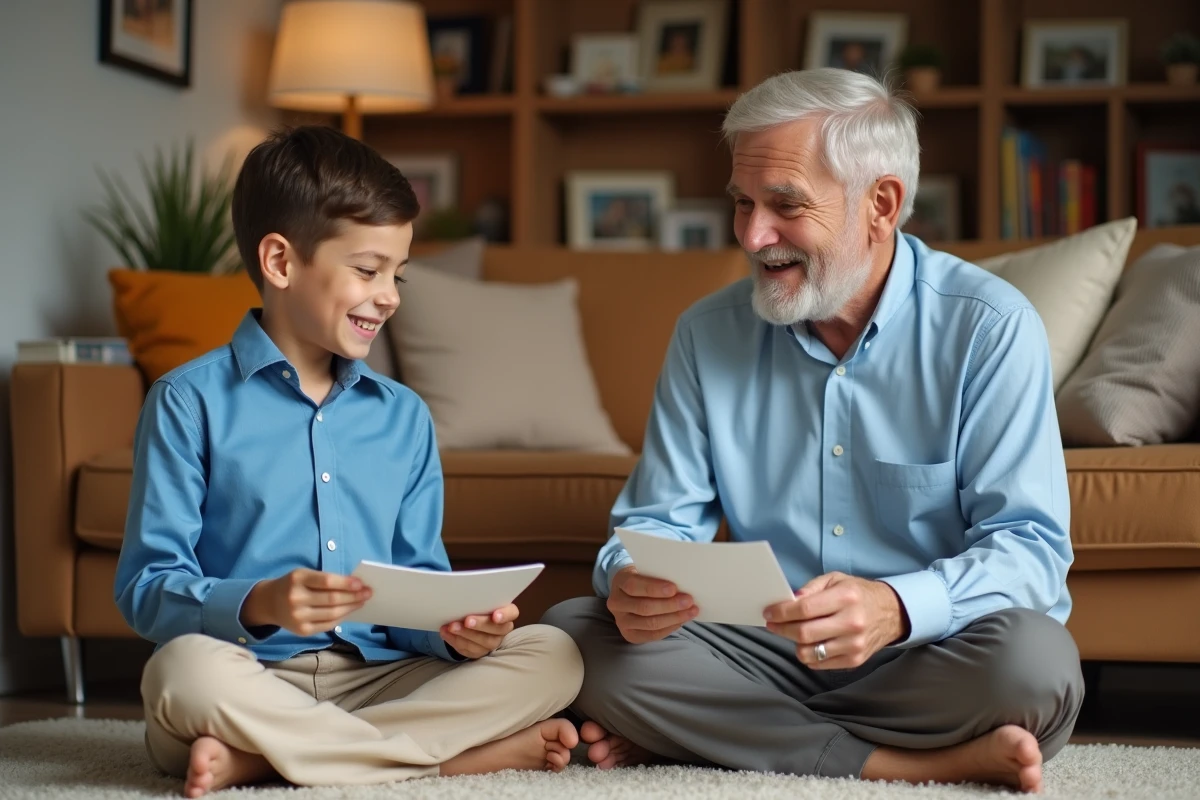
Wherever Grandsons’ Day is celebrated, it fits into the larger puzzle of traditional celebrations that punctuate family life. Countries set their own date, but the purpose remains the same: to celebrate intergenerational relationships and transmission. Depending on the cultures, traditions vary. Sometimes, it’s a shared meal; elsewhere, a story passed down at the table. Some households prioritize conviviality, while others cultivate family memory through letters, games, songs, or traditional dishes.
In China, for example, the emphasis is on discretion and filial respect. A poem, a small gift, a symbolic gesture, everything is in the nuance. During major religious celebrations such as Christmas or Eid al-Adha, it is not uncommon to take a moment to acknowledge the place of children and grandsons within the family circle.
Here are some practices that cross borders and generations:
- Giving handmade gifts designed to mark the bond
- Preparing family recipes that tell the story of a lineage
- Singing songs that are passed down orally, sometimes inspired by Christmas songs
But the celebration also extends beyond the private sphere. In several regions, schools and associations seize the opportunity to organize intergenerational workshops. Here, local traditions are discovered, exchanges take place, and learning occurs. These are all opportunities to strengthen the bond and embed family memory into daily life.
The place of the son in the family: values, bonds, and symbols of today
The family is evolving, and models are changing. Yet, the figure of the son retains a particular strength in family bonds. Dedicated to this relationship, the day is not anecdotal. It reminds us of everything that happens between parents and children, between generations that intersect and respond to each other. The son, bearer of stories, expectations, and sometimes silences, becomes both heir and builder.
Family relationships thrive on simple gestures, honest exchanges, and shared moments. These can sometimes be long conversations, an impromptu meal, or a board game that breaks down barriers. In France, as elsewhere, these moments cement trust and make the son an integral part of family life.
Three key points to understand this role today:
- Strengthening family bonds through listening and dialogue
- Highlighting transmission through memories and stories told
- Supporting autonomy while maintaining solidarity
Our time shapes new symbols. The son is no longer just the child we accompany: he becomes a partner, a co-creator of social bonds. Celebrating this day means recognizing the diversity of trajectories and the richness of exchanges. A word, a gesture, a place to invent each year in the grand family story.